

Downtown Las Cruces is evolving, and the City is inviting everyone to help guide its next chapter by participating in our Downtown Master Plan Update process.
This update builds on two decades of progress, from our original plan in the early 2000s to its 2016 update and beyond. As a living document subject to ever-changing times, this effort focuses on what we’ve learned since 2016: what’s working well, where the plan can be refined, and how downtown can continue to grow as the heart of our community.
From October 20–24, the City and planning firm PlaceMakers will host a week-long public design and planning workshop that combines presentations, open houses, and focused conversations with residents, businesses, and local partners.
Your participation will help ensure downtown Las Cruces remains a vibrant, welcoming place for everyone, reflecting our shared values, celebrating our culture, and strengthening our local economy.
Get Involved
This update is a collaborative effort, and your perspective matters. During our October workshop, participants had multiple opportunities to take part, from attending a presentation to stopping by an open house and adding thoughts to the discussion. Every idea helps refine how downtown continues to serve the people of Las Cruces. We hope you’ll stay engaged as we move towards a draft plan.
Downtown Master Plan Questions for Project Team
We are interested in your opinions on how to improve Downtown Las Cruces through the Master Plan Revision process. Please leave your email and questions so we may address them.
Project Updates
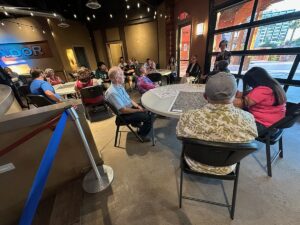
Day One: Las Cruces Community Shares Challenges and Opportunities for Downtown
Following an early morning guided tour through downtown for members of the project team, our week-long public workshop for the Downtown Master Plan Update began in earnest Monday, October 20, with the Downtown Las Cruces Partnership, the people closest to the daily realities of downtown. Their message was clear: downtown has momentum, but now is the time to be strategic about what comes next.
Space is limited, some say, so future growth may mean building up, not out, and not everyone is comfortable with that idea. Even so, there’s strong interest in more housing downtown, especially townhomes, condos with structured parking, and a mix of attainable and market-rate units for the roughly 10,000 people who already work in or near downtown and might choose to live there if options existed.
Several city-owned or underutilized catalyst sites came up repeatedly. People want to see these places activated, whether through housing, shared workspaces, food incubators, or markets.
A grocery store remains a top need. Food trucks, farmers market expansion, and small-scale incubation were also mentioned as near-term wins.
The group praised past streetscape improvements but was blunt about what still feels unfinished: dark side streets, unlit parking lots, a lack of shade, and empty stretches along Campo Street. But, it was agreed, the issue isn’t so much safety as it is the perception of safety. “It’s not scary, it’s just dark,” someone said. A Walk Downtown campaign was suggested to shift the narrative.
They also talked tools: vacancy-to-vibrancy ordinances, use of TIDD funds beyond bricks and sidewalks to support business development, partnerships with NMSU’s Arrowhead Center for incubation, and environmental site assessments to unlock stalled properties.
In short, downtown has a strong foundation. Now it needs housing, light, food, activation, and a coordinated push to turn vacant into vibrant.
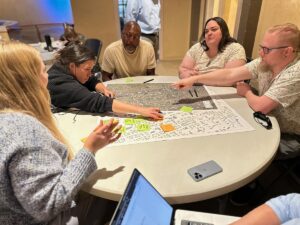 Hands-On Participation
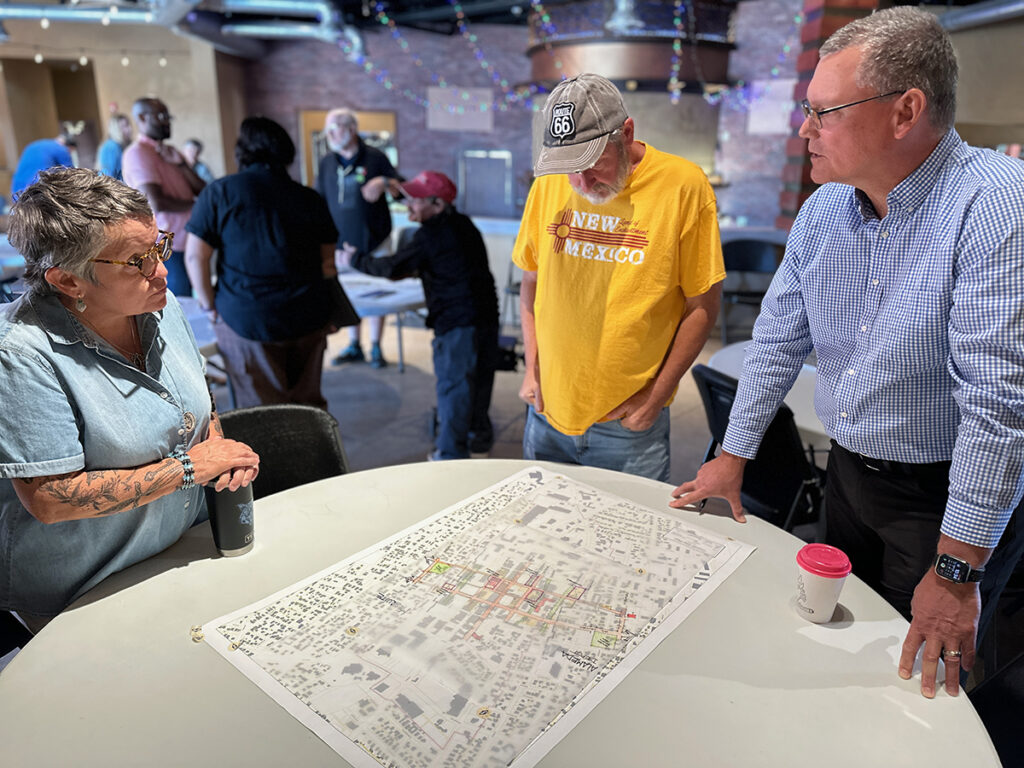
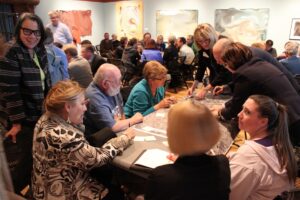
Later in the day began the project’s official public kick-off workshop at Amador Live, where an enthusiastic group of neighbors, business owners, and others with an interest in the future of downtown pored over maps and aerial photos of the project area, noting the area’s assets and opportunities for improvement.
“What we see downtown today — the streetscapes, the plaza, the mix of shops and events — didn’t happen by accident,” said project lead Susan Henderson. “It’s taken over two decades of steady work: planning, refining, building, adjusting, and trying again.”
Noting the incremental nature of the work, she continued: “Downtown is a living project, not a finished one, And that is exactly how great places are made, one decision at a time, over years, with lots of voices contributing.”
Perhaps predictably, each table featured lively discussion as relative strangers sought common ground and different perspectives weaved in and out of the discussion. From the need for improved walkability, to universal design and accessibility for all, to greener, more sustainable landscapes, to the ravaging effects of urban renewal and what can be done to repair historic inequities, the evening touched on all aspects of downtown, both positive and negative.
Day Two: Downtown as a Shared Responsibility
First up Tuesday morning was a session bringing together leaders from multiple City departments — Utilities, Community Development, Economic Development, Police, Parks, and the Livability Department — reinforcing a central idea: downtown isn’t just a planning project, it’s a shared effort across the entire organization.
Departments stressed that the next phase of revitalization isn’t about starting over, but about making downtown more complete, especially by reconnecting it to nearby neighborhoods like Alameda and Mesquite. Streets such as Las Cruces, Griggs, and Oregon were identified as priority links to repair gaps left by past urban renewal decisions.
Housing and redevelopment were major topics. With limited land, future growth likely means building up. City-owned or underutilized catalyst sites offer opportunity for mixed-use and residential development. Infrastructure like utilities, water pressure, and fire capacity can support it, but zoning updates, heights, historic context, and affordability will require careful balance.
Departments also named everyday needs: more shade and lighting, especially off Main Street; better use of city-owned parking lots; stormwater issues around Central Elementary; and support for business incubation rather than just streetscapes.
In short: momentum exists, but stronger physical, economic, and interdepartmental connections will shape what happens next.
Honoring the Past While Planning What’s Next
Next, the project team met with stakeholders and advocates to discuss historic preservation, not as a barrier to downtown growth, but as part of what makes reinvestment meaningful and uniquely Las Cruces. Participants acknowledged progress since 2016, including the City’s Certified Local Government status and stronger preservation awareness in neighborhoods like Alameda and Mesquite. Still, many felt downtown itself lacks a clear preservation identity, and that physical history isn’t yet being leveraged to bring people back downtown consistently.
One example was the Amador Hotel project. Despite its longstanding challenges and setbacks, the idea behind it remains important: preservation as a catalyst, a way to connect downtown to surrounding neighborhoods and the university.
Looking forward, the group emphasized that preservation should go hand-in-hand with new development. They want more people living downtown and adaptive reuse of appropriate buildings. They also stressed small moves that bring life back to the street,
like downtown movie nights, grocery access, and street closures for events like First Friday or Farmers Market.
Barriers remain (unclear incentives, reluctant property owners, and no historic district downtown for starters) but the message was consistent: preservation isn’t nostalgia. It’s a strategy for keeping downtown authentic, active, and for everyone.
Successes and Gaps
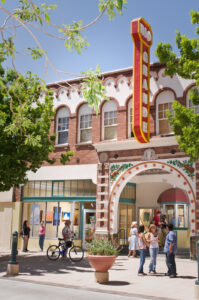 The conversation around downtown business painted a mixed picture: signs of life, but still too many empty buildings and missed opportunities. Since the 2016 plan, the plaza has become a true civic stage, drawing holiday events, performances at the Rio Grande and Plaza Community Theater, and anchoring the Farmers Market twice a week. A handful of restaurants and bars with strong street presence (Little Toad, The Rad, Grounded, and Mateo’s among them) are doing well.
But businesses tucked behind buildings or on low-visibility streets struggle, and many storefronts remain vacant. Participants stressed that downtown needs more everyday activity, especially family-friendly places like Caliche’s, bowling, micro-parks, or ping-pong tables at Callista’s.
The biggest challenges identified weren’t just economic. Perception and street experience matter. Concerns about unhoused residents in the plaza, lack of foot traffic during weekdays, and limited retail variety make it harder for businesses to thrive.
Still, there’s optimism: younger residents want to live near downtown, and with more housing, more light, and more activation, downtown could support a broader mix of shops, services, and experiences.
Pride, Pressure, and Staying Connected to Downtown
Our final discussion of the day was with neighborhood leaders from the historic neighborhoods surrounding downtown. Their message balanced pride and concern: from historic homes restored, to sidewalks improved, to more neighbors walking and biking downtown, these neighborhoods have seen meaningful reinvestment, but they’ve also seen aging infrastructure, absentee landlords, and too many vacant properties left in limbo between generations.
Residents want the City to be more proactive, enforcing the International Property Maintenance Code, working with the land bank to address abandoned lots, and supporting small-scale housing like duplexes and triplexes, so long as they’re well maintained. But larger buildings? Maybe, but nothing above four or five stories.
Walkability remains a core value and a core frustration. People love being able to walk downtown, but crossing Alameda feels unsafe, Campo lacks lighting, and drag racing on Lohman and Amador makes streets dangerous. Pioneer Park upgrades stalled mid-way, leaving lighting and safety issues unresolved.
The farmers market, cafés, and bars ensure downtown is still a draw but residents want everyday needs there too: a small grocery, pocket parks, more public art, and safer streets. Above all, they want downtown to grow in ways that respect the character of the neighborhoods that have supported it all along.
Day Three: The Pin-Up, Where Ideas Start to Take Shape
Wednesday marked the midpoint of our Downtown Master Plan week-long workshop, the moment when conversations, sketches, and notes begin to leave the realm of input and start taking physical form on paper. In design terms, it’s called the pin-up. For the community, it’s the first glimpse behind the curtain and a chance to see how their contributions are evolving into real concepts.
Just like sausage-making, it’s deliberately unfinished. No polished renderings. No final answers. Just broad strokes, emerging directions, and the very real opportunity to redirect or refine before things move further.
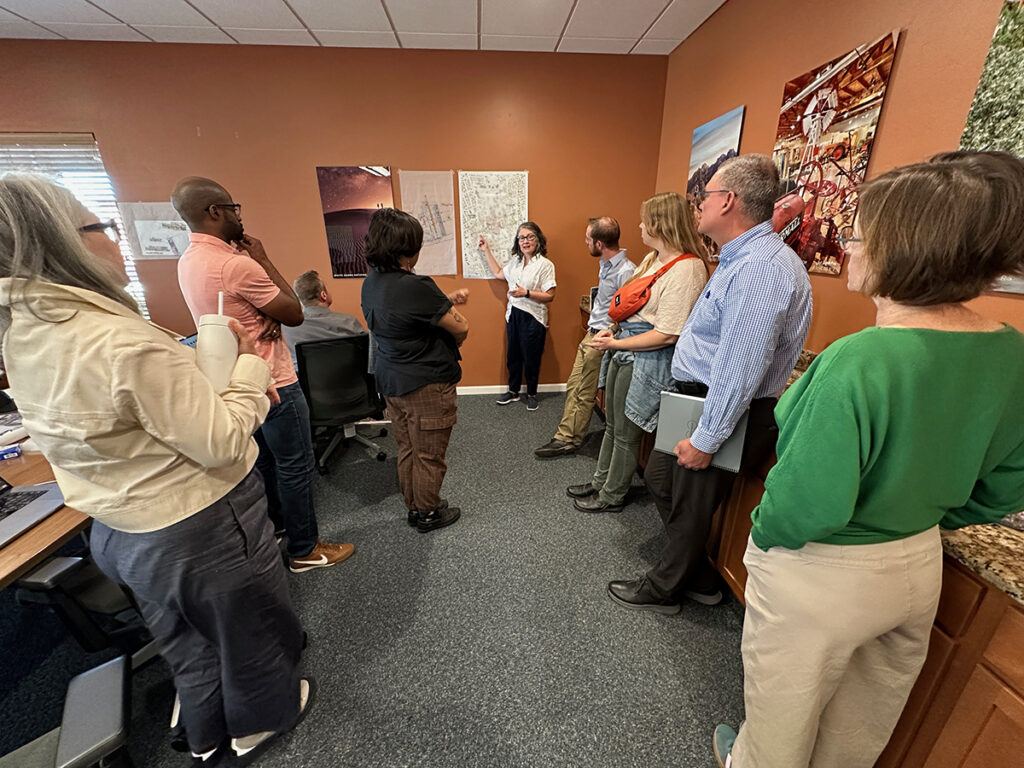
Inside the Studio: Reality Check with City Staff
The morning began in the project team’s working studio, walls covered with aerial maps, trace paper, sketches of catalyst sites, and emerging ideas for reconnecting downtown to Alameda and Mesquite.
The goal wasn’t to present a final plan. It was to test early ideas against on-the-ground realities.
The conversation is crucial. Better to learn early if an idea is unworkable or needs adjustment than to invest time developing something that can’t be built. Most of the work-in-progress held up. Some needed refinement. All benefited from more eyes on the problem.
Ideas Meet the Public
From the studio, the pin-up moved to Amador Live where the same sketches, diagrams, and catalyst site concepts were displayed for the public, spread across tables, with markers still drying.
Residents walked from drawing to drawing, discussing ideas directly with teammembers in one-on-one conversations.
And the themes we’ve been hearing all week echoed clearly in their reactions:
- Walkability remains a top priority: Safer crossings, more shade, better lighting, especially on streets just off Main.
- More life on Main Street: More day-to-day activity, not just weekends and events. People want commercial destinations to complement the civic areas already in place.
- Better connections to neighborhoods: Particularly across Las Cruces, Griggs, Oregon, Alameda, and into Mesquite and Amador. The idea of downtown as an island is fading; people want it woven back into the city around it.
- Green and comfortable streetscapes: Climate tolerant trees, stormwater solutions, parks, and places to sit and linger, not just pass through.
Where This Leads
The pin-up isn’t a finish line, it’s a hinge point. Immediately following the morning meetings, the team began refining and consolidating the ideas into something closer to a plan.
Day Four: Refining the Vision, Expanding the Conversation
Thursday marked a shift in this week’s workshop, becoming increasingly focused on design and production but still weaving in the voices of City departments whose work touches downtown in less obvious but equally important ways. One of those voices came from the City’s Quality of Life Department, whose work shapes the cultural, educational, and emotional life of the community: museums, libraries, senior services, public art, and spaces where residents connect not just with place, but with each other.
Quality of Life staff joined the project team to talk about where downtown planning intersects with cultural vitality. Their message was clear: downtown isn’t just an economic engine or a transportation hub, it’s a civic stage. A place where public art, outdoor performance, learning, and daily life overlap.
Thereafter, the day was largely a studio grind: absorbing comments from earlier pin-up sessions, then refining drawings, and making decisions about massing, connections, public space, parking, housing types, and catalyst sites.
One of the concepts advancing toward presentation is an infill development opportunity at the convergence of the Plaza and East Organ Avenue, shown here looking southeast toward the old Post Office building, currently home to the Municipal Court.
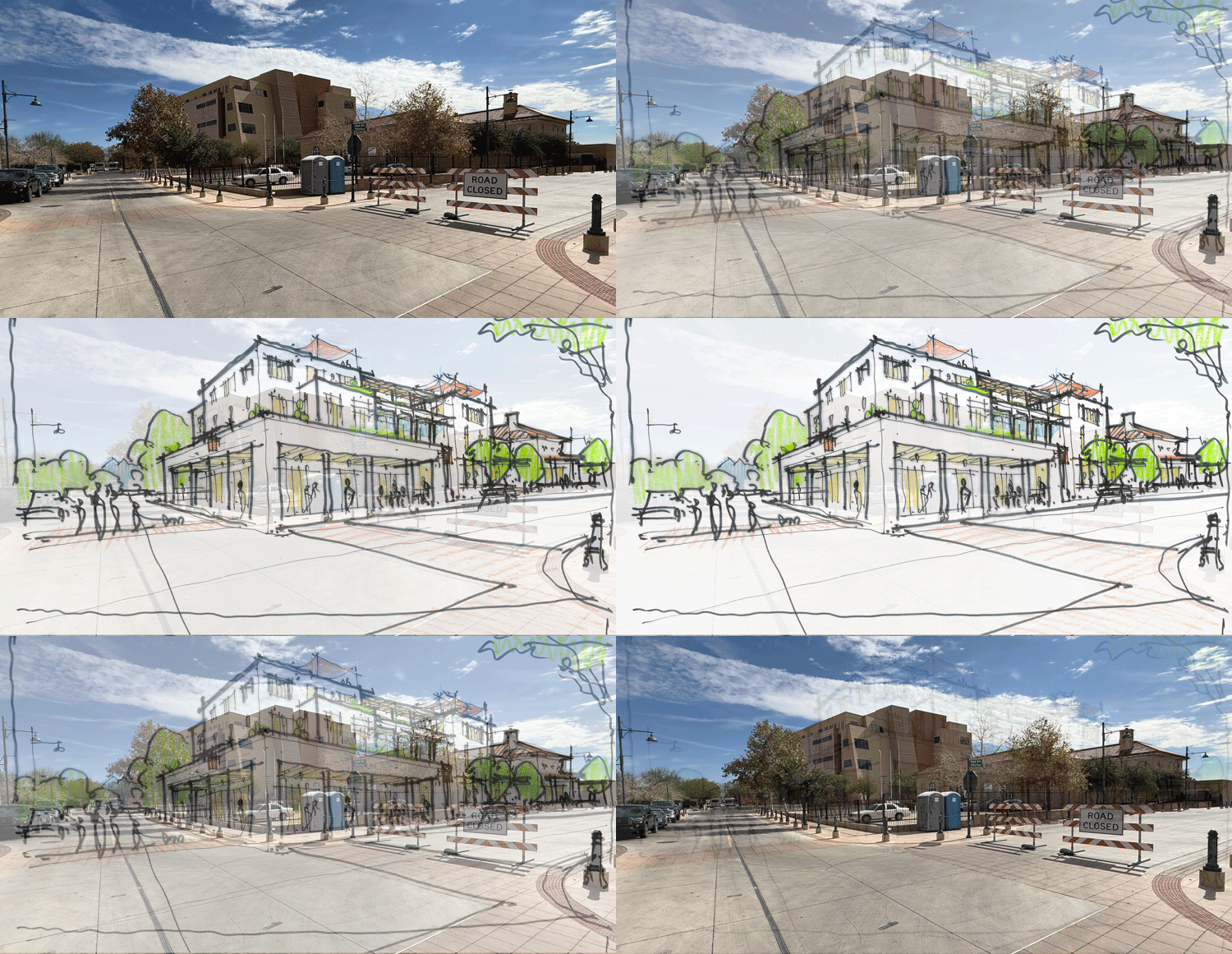
In its existing condition, this edge of the Plaza is quiet — potentially significant but underutilized. The proposed concept imagines a different future: preserving the historic portion of the Post Office while introducing a new mixed-use building. Ground-floor retail or restaurant space can energize the Plaza edge, while two stories of housing above bring more residents downtown to support activity well beyond weekends and special events.
By late afternoon, the studio walls were filling again with trace paper, diagrams, and revised site studies, all preparing for Friday’s closing presentation, 6-7:30pm in City Hall’s Council Chambers. But it’s important to be clear: the evening presentation doesn’t mark the end of the planning process. It marks the end of workshop week: the most collaborative and creative phase, yes, but not the finish line.
From here, the team will take the ideas, critiques, sketches, hesitations, and hopes gathered this week and begin refining them into a draft Downtown Master Plan. That draft will go through further review, be shaped into a final plan document, and ultimately be brought before the Planning and Zoning Commission and City Council, presenting more opportunities for additional public comment.
What this week has done is bring residents, businesses, neighborhoods, and staff together to make ideas visible. On Friday evening we’ll show where those conversations have led so far.
It’s only the end of Week One. The work of building the next chapter of downtown Las Cruces is just beginning.
Day Five: Community Gathers for Workshop’s Closing Presentation
After five full days of sketches, meetings, and conversations, the Downtown Master Plan Update reached an important milestone Friday evening with its closing presentation in City Hall’s Council Chambers.
Prior to the presentation, the planning team spent the day preparing final drawings, graphics, and recommendations to share with the community. At 6 p.m., residents, business owners, city staff, and others joined the team in the Chambers to see the results of the week’s work.
David Weir, Deputy Director of Community Planning and Development, opened the evening by placing the effort in context. He emphasized that the update builds on the foundation established in the 2016 plan, advancing it rather than replacing it. What’s new this time is a focus on catalyst properties owned by the City or willing landowners where small-scale, incremental development could demonstrate what’s possible.
 Project Lead Susan Henderson then walked the audience through what happened during the week. She detailed how many of the goals from the 2016 plan have already been achieved, from streetscape improvements to the creation of the Plaza, and how the current update is the next logical step.
She described the workshop process: five days, 12 meetings, and conversations with stakeholders ranging from neighborhood associations and business owners to preservation advocates, city departments, and community boards. Across those conversations, three themes emerged consistently as community priorities:
• Make downtown more comfortable year-round with increased shade, trees, and sun protection.
• Add more housing downtown, diverse in type and price, to support local business, cultural life, and everyday activity. Housing, she noted, is what will bring steady activity beyond weekends and events and make future investments more viable.
• Improve connections to surrounding neighborhoods, especially along streets like Las Cruces, Organ, Griggs, Alameda, and Campo, to better link Alameda Depot, Mesquite, and downtown.
These three priorities, Henderson explained, form the foundation of the recommendations being developed for the final plan.
She then presented illustrative designs for four catalyst sites:
• N. Water Street at W. Griggs Avenue
• N. Water Street between W. Griggs and W. May
• The Plaza at W. Organ Avenue, including potential infill north of the historic Post Office after a future relocation of the Municipal Count
• E. Las Cruces Avenue at N. Campo Street
Each site explores different combinations of mixed-use development, housing and retail, adaptive reuse of historic buildings, stormwater solutions, and enhanced shade, trees, or civic space. The drawings presented are not final designs, but visual examples of what small, realistic steps could look like.
Henderson also noted that the completed plan will recommend updates to the city’s downtown development code, helping ease the process of infill development downtown.
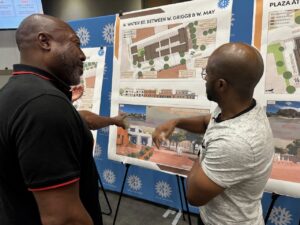
Following the presentation, attendees circulated around the room to view display boards showing the week’s work, sharing comments and questions directly with the project team.
What Happens Next
 With workshop week now concluded, the process enters its next phase. The planning team will return to their offices to begin drafting the updated Downtown Master Plan document. Once a working draft is complete, it will be reviewed by City staff. After revisions, the plan will move to the hearing process, where the community will again have the opportunity to provide public comment.
The closing presentation marked the end of the workshop, but not the end of the planning process. Much work remains ahead, and the final plan will continue to be shaped by the people of Las Cruces.
About the Downtown Master Plan
The Downtown Master Plan serves as a blueprint for continued investment and vitality in the heart of Las Cruces. It guides future decisions about land use, design, mobility, and economic development to ensure downtown remains a vibrant destination for residents, businesses, and visitors alike.
The 2025 update will focus on potential catalyst projects, strengthening connections with surrounding neighborhoods, and integrating lessons learned since 2016.
